Kirtipur -2, Kathmandu, Nepal
-
-
networkdalitwomen@gmail.com
-
01-5300775 / Toll free number-18105000341
Kirtipur -2, Kathmandu, Nepal
networkdalitwomen@gmail.com
01-5300775 / Toll free number-18105000341

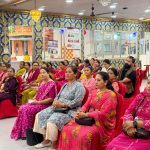
Dalit Women Network (DWN) actively participated in the 17th National Human Rights Magna Meet and 17th International Human Rights Day, 2025, organized from 8 to 14 December 2025. The Magna Meet, with the main slogan “Respect for human rights, ensuring good governance, a just and prosperous Nepal”, was joined by 125 organizations working in the field of human rights and social justice, including the National Human Rights Commission and various non-governmental organizations in Nepal. DWN played a special role in successfully concluding the Magna Meet by organizing a panel discussion/policy dialogue on 12 December 2025 to bring together all human rights issues in one place and to raise issues such as democracy, human rights, the rule of law, good governance, and support for intergenerational justice. The theme of the panel discussion was “Access to human rights, justice, and democracy for all Dalit and marginalized women and youth”.
This program was organized to discuss the roles that the state and civil society should play in enhancing access to human rights and justice for Dalit and marginalized women and youth, and in promoting democracy through their meaningful participation and representation in the political sphere; the discussion also covered the provisions of current laws, policies, and programs, as well as necessary policy reforms and their implementation.
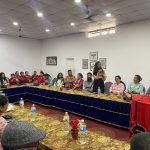
The program featured four panelists: Suni Lama, President of National Indigenous Women Forum (NIWF), who has been advocating for the issues of indigenous women; Seema Khan, President of Nepal Muslim Women Welfare Society (NMWWS), who is active in the issues of Muslim and indigenous women; Anjana Bishankhe, former member of parliament; and Siddhanta Bhatta, former secretary of Tribhuvan University Independent Student Union and currently pursuing a Master’s Degree in Environmental Science at Tribhuvan University, Kirtipur.
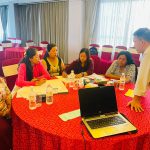
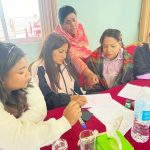
The program was moderated by Man Kumari B.K., Executive Director of Dalit Women Network. A brief paper was also presented covering the legal and policy implications within the program theme. Based on the brief paper and program theme, the moderator asked the panelists questions one by one. The panelists then collected questions from the participants and answered them. The social and political leaders, representatives of various organizations, youth, women human rights defenders, and women activists from Dalit and marginalized communities participated in the program.
The program was discussed with the contribution of Dalit, indigenous, Muslim, and Madhesi women and youth in the movement for human rights, justice, and restoration of democracy. There was a comprehensive discussion and interaction on the roles of civil society and the state to influence laws, policies, and strategies to be adopted in the coming days to strengthen democracy, justice, and democratic good governance.
Despite laws and policies, women and youth from Dalit and marginalized communities are still deprived of human rights and justice due to a lack of effective implementation and low representation of women, Dalits, and youth in the decision-making process. The discussion emphasized that inclusive democracy is not possible without addressing the interconnected discrimination arising from caste, class, gender, geographical location, and age. This policy dialogue, through a panel discussion, played a crucial role in fostering a shared understanding of the current situation, challenges, and opportunities facing Dalit and marginalized women and youth in access to human rights, justice, and democracy.
In conclusion, DWN has created formal and informal learning spaces through policy dialogue/panel discussion at the national level with the grant. A total of 64 participants (male – 9, gender and sexual minority – 3, and female – 52) from Dalit, indigenous, LGBTIQ+ people, Muslim, Madhesi, and people with disabilities, representing government and civil society in the program. The participants expressed their solidarity with the pertinent issues of Dalit and marginalized women and youth in strengthening democracy, rights, and inclusion in the present context.